Endpoint Security
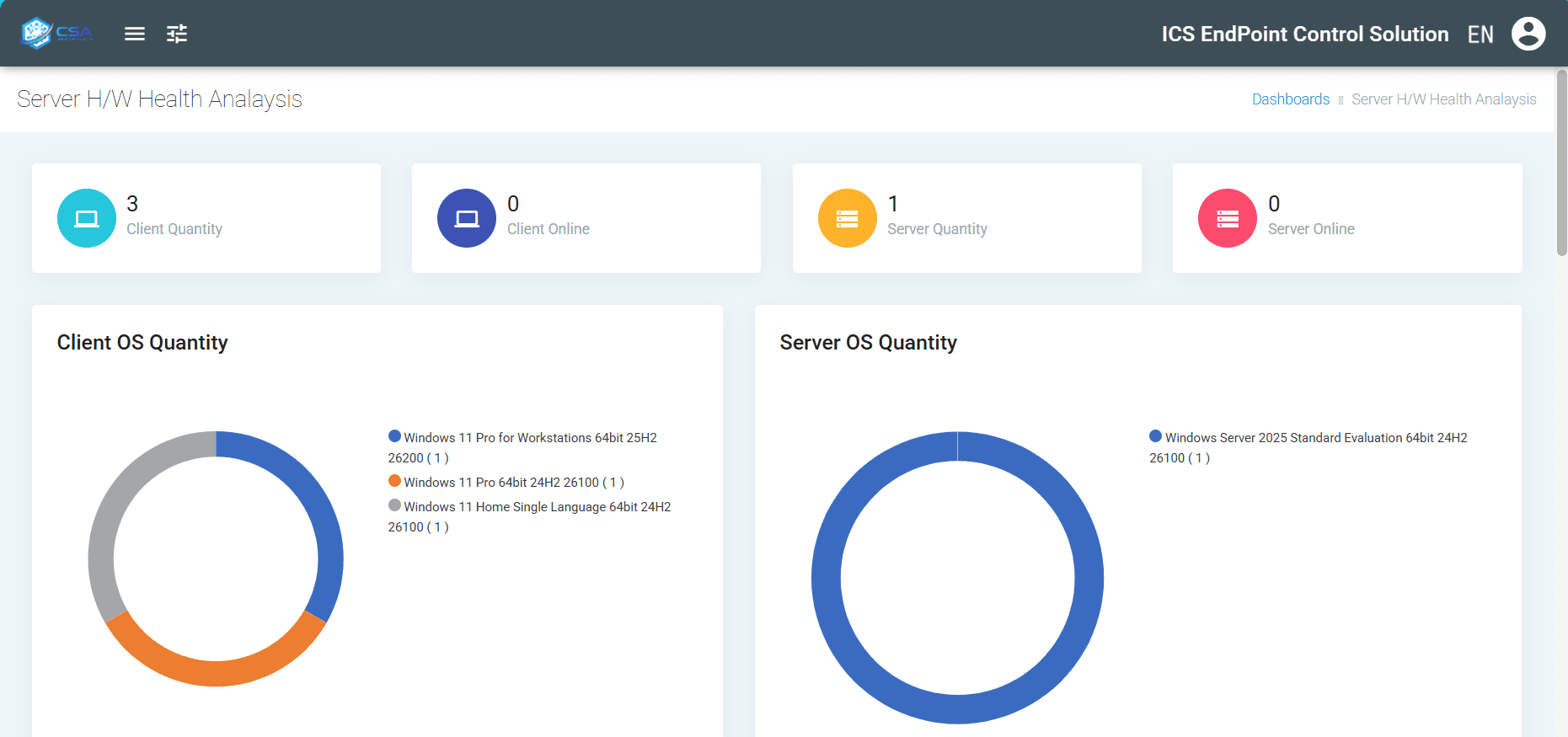
Comprehensive endpoint protection powered by AI-driven threat detection.
- Zero-Trust USB Whitelist
- Real-time malware detection
- Wi-Fi & Network control
- Extension & Browser security
 ICSInternational Cyber Security
CSA helps enterprises manage endpoints, control applications, and prevent data leaks with advanced AI technology.
Explore more ↓
CSA Endpoint combines device security, centralized management, data loss prevention, and behavior analytics into a single agent — replacing four separate tools.
Comprehensive endpoint protection powered by AI-driven threat detection.
Centrally manage and remotely control every device in your system.
Effective Data Loss Prevention to protect sensitive information.
Behavior analysis, smart reporting with detailed insights.
The only 4-in-1 solution on the market
Save up to 60% vs purchasing each solution separately.
Every feature operates as an independent control layer — enable, disable, and tune per workstation group.
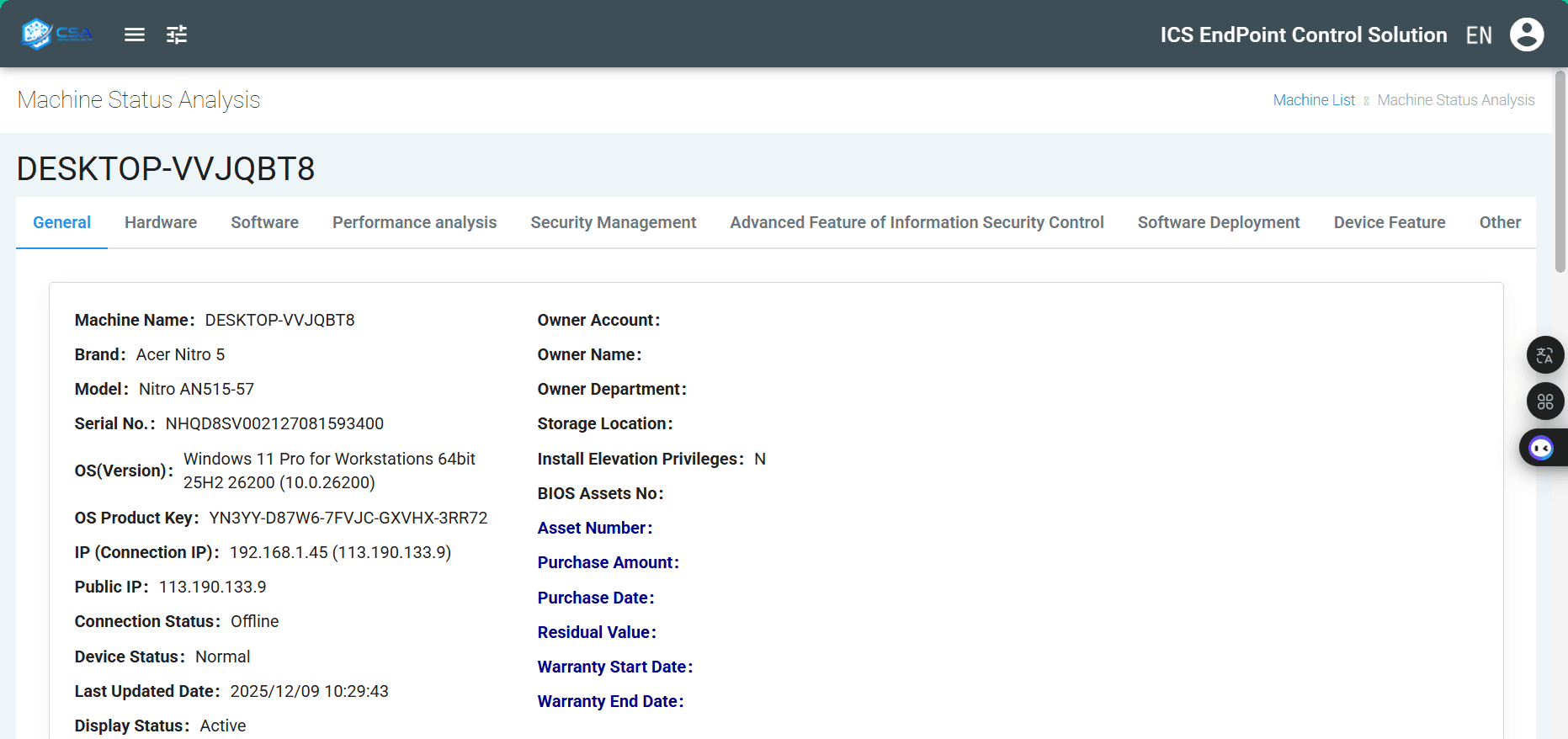
Monitor CPU, RAM, Disk in real time with automatic alerts when thresholds are exceeded.
Learn more →Demo video captures real console and agent workflows — no simulated UI.
Want to see more resources or book a live demo with our engineering team?
Compared by specific capabilities your engineering team needs to evaluate — not by aggregate scores or rankings.
| Capability |  CSA CSA | Symantec / Forcepoint | Microsoft Purview E5 | Other Local |
|---|---|---|---|---|
| Smart AI Auto-learning Whitelist | Yes (4 data sources) | No | No | No |
| False Positive | < 2% | 8-15% | 10-12% | 15-25% |
| USB Control by Serial Number | Yes + popup + email realtime | Yes (very expensive) | Not native | Basic |
| Geofencing + Off-hours Restrictions | Yes | No | No | No |
| Endpoint Behavior Analytics | Native | Separate module (very expensive) | No | Very weak |
| Sensitive File Tracking (external, network) | Yes | Yes (expensive) | Cloud only | No |
| Detailed Software Usage Reports | Very detailed | Basic | No | Basic |
| 4-in-1 (Asset + Perf + Deploy + DLP) | Yes | No | No | No |
| Incident Response SLA | 30 min (24/7 support) | 4-8h | 2-6h | 1-4h |
Need your engineering team to do a detailed comparison with your current system?
A phased approach reduces batch changes and keeps acceptance criteria consistent throughout.
Install Agent in Log-only mode, assess existing risks, and collect baseline data.
Build a whitelist rule set aligned with your company culture and workflows.
Run a pilot on representative machines, collect feedback, and optimize policies.
Activate real-time protection across the entire system. Train end users.
Deploy CSA Agent via MSI package or GPO in just 5 minutes
Set security policies from the centralized management Console
Track endpoint status and receive instant alerts
Export Excel reports, risk analysis, compliance auditing
ICS is committed to delivering the most advanced endpoint security solutions for your business.
Integrated AI + IoT for automatic, fast, and accurate threat detection and response.
10+ years of experience in Enterprise Cybersecurity in Vietnam and internationally.
Hotline 0931.487.231 - Response within 15 minutes. Technical team ready anytime.
Compliant with ISO 27001, GDPR, and Vietnam's Decree 13/2023/NĐ-CP on personal data protection.